Wednesday, February 24, 2016

Blog 18- Answer 2


1. What is your EQ?
  • What is the best way to ensure that middle school students retain what they learn in class?
2. What is your first answer? (In complete sentence format)
  • My first answer in answering my EQ was being able to teach in a method that appealed to every students learning method. So teach to the visual, auditory, and kinesthetic learners.
3.What is your second answer? (In complete sentence format)
  • My second answer could be to give the students either longer breaks or more access to their electives. Teaching them that it's okay not to be right 100% of the time as long as they learned from the mistake.
4. List three reasons your answer is true with a real-world application for each.
  • It has been proven that students who take band as an elective get a 23% higher grade in their core classes compared to students who don't take band.
  • Ipoly itself has a ten minute passing period for students to unwind, and we have a tiny campus as it is.
  • yes
5. What printed source best supports your answer.
  • The printed source that best supports my answer was my thirty-seventh source because of what student do with their electives and what they can do with their stress levels.
6. What other source supports your answer?
  • Several TED Talks help support my answer, one that sticks out is the one I have for my fourty-eighth source. It talked about how schools are seen to be killing creativity in their students.
7. Tie this together with a concluding thought.
  • Students in the US are the most stressed out then they ever have been in years. And the stress can lead to health problems, some students suffer anxiety/panic attacks. We can't just remove them from school, but we can make it more bearable. Hopefully by funding/adding more electives this can be something they look forward to as well as a place for them to unwind and channel out the stress that can build up.

Wednesday, February 10, 2016

Blog 16: Independent Component 2 Approval

.

1. Describe in detail what you plan to do for your 30 hours.

  • I am not entirely sure about what I want to do for my independent component 2. I have some ideas but would like to actually sit face to face and discuss what exactly are the options of things that I can do for independent component two.
2. Discuss how or what you will do to meet the expectation of showing 30 hours of evidence.

  • I could possibly take a class or create my own lesson plan. But again I am not sure about what I can personally do. If I took a class I may not have time for school work because of my busy schedule. If I planned a lesson plan I don't see how that could take up 30 hours to put together and possibly teach.
3. Explain how this component will help you explore your topic in more depth.

  • This component could help me in several ways. I could see if teaching could actually be for me. See how it is for a teacher to get to where they need their students to be at specific parts of the school year. If I did another 30 hours to my actual senior mentor ship hours I might not be able to make time for the actual 50 hours.

4. Post a log in your senior project ours and label it Independent Component 2.

Look at sidebar :D

Thursday, February 4, 2016

Independent Component 1


“I, Idalia Lopez, affirm that I completed my independent component which represents 33 hours of work.”My mentor Mr. Roberto Alvarado helped me greatly throughout my independent component/mentorship hours. He gave me a ton of advise about teaching middle school students and what works best when teaching different classes. He teaches both math and science so understands how to switch gears and teach different subjects to different classes and students.I was able to see how I was doing as a kind of teacher's assistant. I helped with grading and saw how students could be and saw what they could do when putting their minds into something that they thought could be cool. 
  • INTERPRETIVE 
  • Defend your work and explain its significance to your project and how it demonstrates 30 hours of work.   Provide evidence (photos, transcript, art work, videos, etc) of the 30 hours of work.  
 Durring my extra 33 hours to my overall mentorship hours I was able to see when the kids were taught. In this example it was about when they were being taught about the cell. Then before wrapping up the unit I was able to see how much of it they understood when they were made to build either a plant cell or an animal cell. Some of my favorites were when some of the kids came in with their cell projects and they were made out of food. Some were made as cake, while the ones who went even further above and beyond made their cells out of jello and fruit. In this picture the student made their cell out of clay, string, tooth picks, and a multitude of other things.
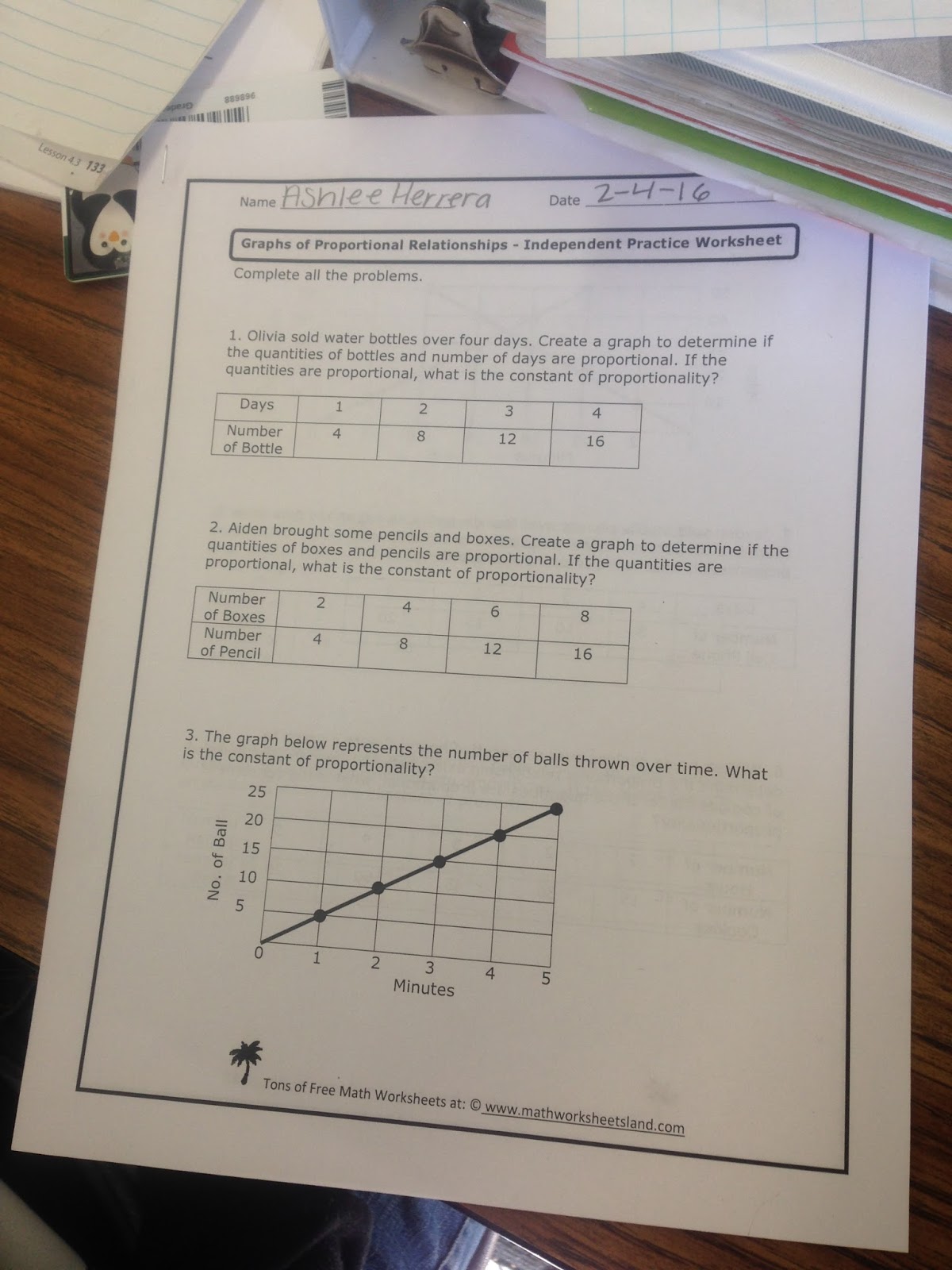
 This is a sample of what some of the kids would bring me to help them with after school. In these problems I helped one of the students with drawing graphs and figuring out formulas. I myself was a little rusty in some of the math problems that they got assigned. And some of the things they were learning were being taught completely different from when I was being taught by the same teacher.
 I helped several students through out the 33 hours I was at mentorship. I offered help in multiple subjects when they needed the help. In this picture a student was working on her homework for history. It was about the characteristics of Islam and what aspects of it can be seen our society today. I cannot upload many photos of students due to confidentiality reasons.

  • APPLIED
This component helped me understand the foundation of my topic better because I was able to see what I could be doing as a teacher if I decided to go into this field as a career. It gave me a better understanding of what I could take into consideration when thinking about answering my EQ. By adding on the extra hours to my mentorship hours I was able to spend more time with actual student and be able to get the ideas and research I needed through hands on research, compared to if I had read a book. For example, one of the articles I had read for my research talked about how middle school students need a lot of patience because of how they are at that specific age. And I was able to see that hands on, but it also showed me that not everything I had read in articles was specifically true. 

Wednesday, February 3, 2016

Lesson 2 Reflection


1. What are you most proud of in your Lesson 2 Presentation and why?

  • I am most proud of being able to talk about what I do in mentorship. Mentorship plays a HUGE part of my senior project and to be able to talk about it was very nice.
2. a.     What assessment would you give yourself on your Lesson 2 Presentation (self-assessment)?

       AE       P          AP       CR       NC

     b.     Explain why you deserve that grade using evidence from the Lesson 2 component contract.

  • I feel that I deserve a P because I was had proper projection of my voice through out my entire presentation. I was dressed professionally and was able to engage the audience. My activity had the entire class invested into it as well as providing the debrief after I concluded my activity. 
3. What worked for you in your Lesson 2?
  • What had worked for me in my lesson 2 was being able to have a power point with me as well as one of my friends controlling my power point slide right besides me. Also I enjoyed being able to add an activity to my presentation to help me see how my classmates were enjoying my presentation.
4. What didn't work? If you had a time machine, what would you have done differently to improve your Lesson 2?
  • I would have talked more about what I have done research as well as my independent component. I may have also added more to my activity.
5. What do you think your answer #2 is going to be?

  • I believe my answer 2 could be about how students should be given more time to having a break in between their classes. It doesn't necessarily need to be too long, just as long as it's longer than 3 minutes. Something along the lines of extending their resting period or having less classes in one day and more time spent in one class.

Thursday, January 14, 2016

Third Interview Preparation - What is the best way to ensure that middle school students retain what they learn in class?


1.  Who do you plan to interview?  What is this person's area of expertise?

  • I plan to interview the other 7th grade teacher Mr. Kawakami. He teaches the advanced class of mathematics. 

2.  Verify that you have called your interviewee to schedule an interview.  What is the date and time of the interview? 

  • I have not yet scheduled the interview but plan to do so this week when I go to mentorship.
3.  Phrase an open-ended question that will help you find research resources that would help to answer the EQ.

  • What has helped you with teaching advanced middle school math?
4.  Phrase an open-ended question that will help you think about other useful activities you might do to help you answer the EQ (IC2, possible experts to talk to, etc).

  • What do you do when you see that some students are struggling with a lesson you taught them?
5.  Phrase two open-ended questions that help you to understand your interviewee's perspective on an aspect of your EQ. 

  • How do you know when students understand what you taught them in class?
  • What do you recommend to new teachers who are having trouble with teaching students?

Thursday, January 7, 2016

Blog 13: 10 Hour Mentorship Check-In


1.   Where are you doing your mentorship?


  • I am completing my mentorship at Sparks Middle School located in La Puente. (15100 E Giordano St, La Puente, CA 91744)
2.   Who is your contact?  What makes this person an expert?

  • My contact is Mr. Roberto Alvarado. He has been a teacher for over 10 years, with experience on teaching different grade levels.
3.   How many  hours have you done during the school year? (Summer Mentorship Hours and Mentorship Hours should be reflected separately in your Senior Project Hours log located on the right hand side of your blog).

  • I have done as of January 7th I have completed 35 hours and 35 minutes with my mentor excluding my summer hours. I am including my independent component hours, I just need to separate the hours.
4.   Succinctly summarize what you did, how well you and your mentor worked together, and how you plan to complete the remaining hours.

  • Every time I go into mentorship I start off by sitting and doing service learning by watching how my mentor teaches his class either science or math. After that I stay in after school and tutor some of the students that stay after school so that I get a feel of what teaching could feel like. 
EQ: What is the best way to ensure that middle school students retain what they learn in class?

Monday, January 4, 2016

Blog 12: Holiday Project Update


1.  It is important to consistently work on your senior project, whether it is break or we are in school.  What did you do over the break with your senior project?
  • Right before we got off for break I was able to squeeze in two hours into my mentorship volunteer hours. Over the break I was able to read sections of a book my mentor had lent me. It was called "The Structure of Schooling: Readings in the Sociology of Education."
2.  What was the most important thing you learned from what you did, and why?  What was the source of what you learned?
  • The most important thing I learned from what I did over the break was I saw what kind of material students studying to become teachers read and it gave me an idea of what to expect if I were to take classes such as the ones my mentor took.
3.  Your third interview will be a 10 question interview related to possible answers for your EQ. Who do you plan to talk to and why?

  • I plan on talking/interviewing  one of the other teachers from Sparks (where I go for mentorship) whether it be a teacher teaching the same thing to the same grade or an eighth grade math teacher teaching. This is because a seventh grade teacher would be teaching the same students I'm working with when I'm with my mentor. But on the other hand if I interviewed an eighth grade teacher it would give me a different perspective of students.